


Barada River
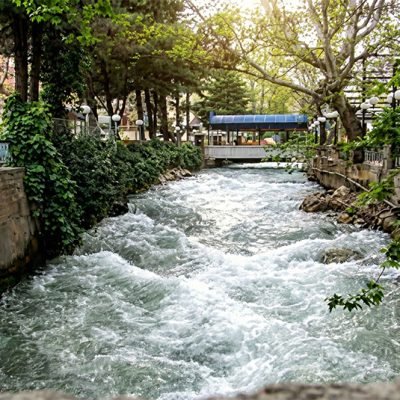
Barada River
It is the legendary river that represents the “pulse of Damascus.”
It springs from the northwestern mountains (Al-Zabadani) and carves its way through a picturesque rocky valley until it reaches Al-Ghouta.
It has long been known as the “River of Gold” for its historical role in shaping the civilization of the region. It is not merely a watercourse, but a living memory and a moist refuge that softens the harshness of the dry climate.
- Therapeutic benefit
- The experience
- Location
- Best times to visit
The areas surrounding the river course, especially in its upper regions such as Wadi Barada and Al-Zabadani, are considered ideal destinations for climatotherapy.
The air there is characterized by dryness, purity, and refreshing coolness, making it particularly suitable for patients with respiratory diseases and asthma.
Moreover, the sound of flowing water cascading between rocks, combined with the lush shade of surrounding trees, helps reduce nervous tension and contributes to relieving mental fatigue caused by the noise and stress of urban life.
The experience is characterized by a social yet tranquil atmosphere at the same time.
You can sit in one of the traditional parks (open-air cafés) spread along its banks in the Al-Rabwa area or near the spring itself.
The experience centers on enjoying the area’s natural coolness even in the height of summer, eating fresh, healthy food, and relaxing beneath the ancient poplar and willow trees that form a natural canopy,
shielding from the sun while allowing a gentle, refreshing breeze to pass through.
The river springs from the south of the city of Al-Zabadani in the Eastern Mountain Range and flows through the winding Wadi Barada, nestled between towering mountains and dramatic rocky slopes,
surrounded by fruit orchards and dense forest trees. These landforms (mountain, valley, river) create a visually diverse environment that soothes the eyes and breaks the monotony of urban landscapes.
Spring (April and May), when the river is at its peak flow and the vegetation is at its lushest,
and summer, to escape the city heat and enjoy the valley’s natural coolness (summer resorts).